Construction Dumpster Rental Near Me — Sizes, Pricing & What to Know
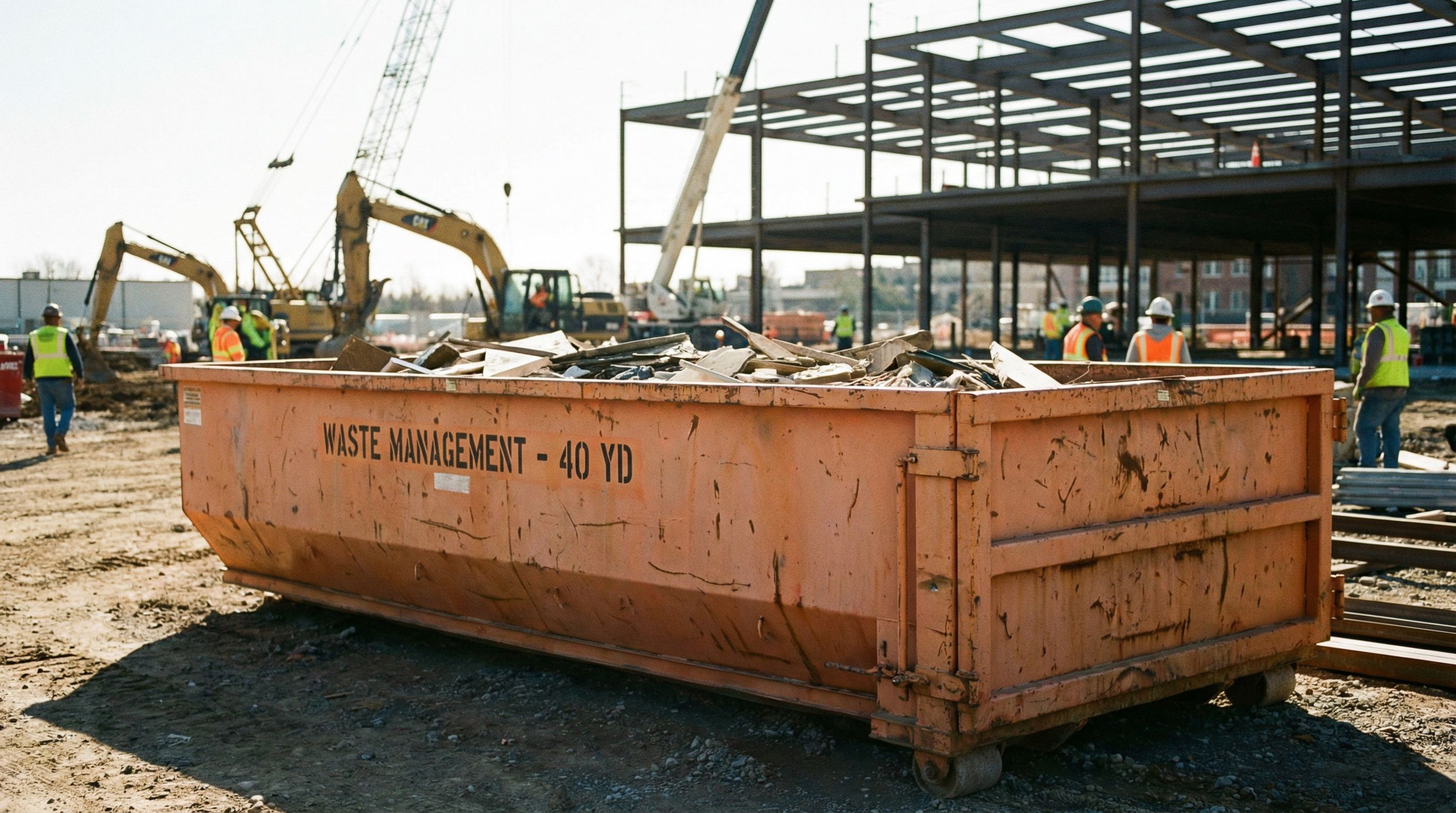
Construction projects generate enormous amounts of debris fast — lumber, drywall, concrete, roofing materials, metal, packaging, and mixed waste all pile up simultaneously. A construction dumpster rental keeps your job site clean, compliant with waste management regulations, and moving efficiently. Whether you're framing a new home, doing a gut renovation, or managing a commercial build, having the right container on site from day one is non-negotiable. Construction dumpsters differ from standard residential rentals in capacity, weight tolerance, and sometimes material restrictions — here's what you need to know before you book.
Why Rent a Dumpster for This Project?
Job site compliance
Most municipalities require active construction sites to have waste disposal on-site. A roll-off keeps your project code-compliant and avoids fines.
High weight capacity
Construction debris is heavy. Concrete, masonry, roofing shingles, and lumber add up fast. Construction-rated containers handle 3–10+ tons.
Flexible scheduling
Long-term job site rentals with swap-out service available. Get a full container swapped for an empty one without downtime.
Mixed debris accepted
Construction dumpsters accept lumber, drywall, concrete (with limits), roofing, insulation, metal, cardboard, and general site waste.
Keeps crews productive
A clean, organized job site is a faster job site. Workers spend less time stepping around debris and more time building.
Proper disposal
Reputable providers ensure construction waste goes to licensed facilities. Protects you from illegal dumping liability.
Recommended Dumpster Sizes
20 Yard Dumpster
Small residential renovations and additions
$375–$575
avg. price
30 Yard Dumpster
New home construction and major remodels — most popular for contractors
$425–$650
avg. price
40 Yard Dumpster
Commercial builds, large multi-unit residential, demolition projects
$475–$750
avg. price
Pro Tips for This Type of Rental
- For concrete and masonry, always confirm the weight limit before loading — these materials max out containers fast.
- On active job sites, consider a swap service: the provider hauls the full container and returns an empty one.
- Separate recyclables (metal, clean lumber, cardboard) — some providers offer recycling rebates.
- Position the container near the work area but away from access paths for equipment.
- For multi-phase projects, book in advance — construction season creates high demand and limited availability.
Watch Out
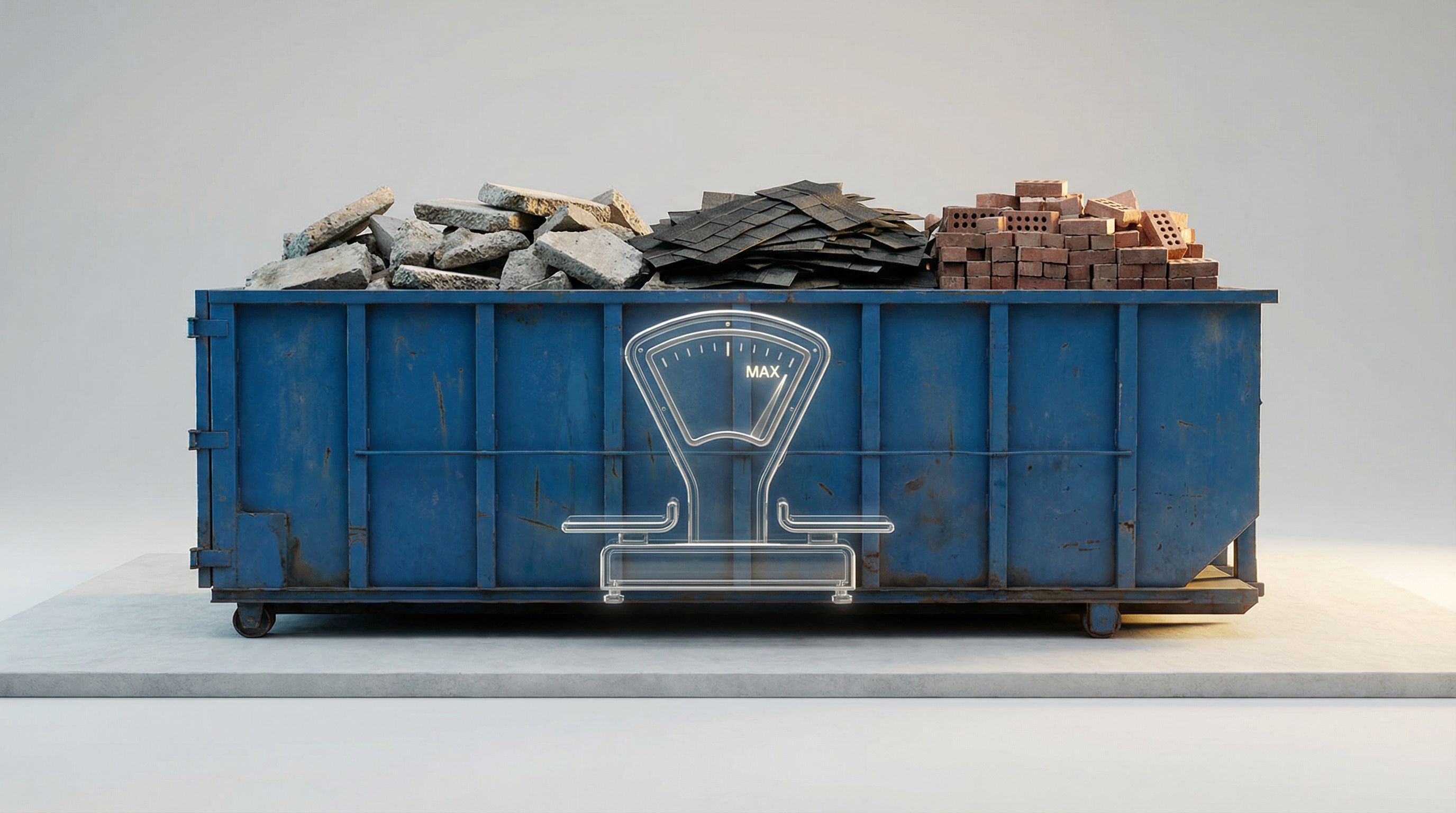
Heavy Material Weight Guide
Overage fees: $60–$100 per ton over limit
Weight by Material Type
200–400 lbs/yd³
400–600 lbs/yd³
750–1,500 lbs/yd³
1,500–2,000 lbs/yd³
2,000–3,000 lbs/yd³
Example: A 20-yard dumpster has a 3-ton (6,000 lb) limit. Just 4 cubic yards of concrete = 8,000–12,000 lbs — already 2× over the limit. Always confirm weight allowances before loading heavy materials.
Frequently Asked Questions
What size dumpster do I need for a construction project?
For residential new construction or major remodels, a 30-yard is the standard. Small renovations fit in a 20-yard. Commercial projects and full demolitions typically need 40-yard containers, sometimes multiple.
Can I put concrete in a construction dumpster?
Yes, but concrete is extremely heavy and most standard roll-offs have weight limits that concrete will quickly exceed. Many providers offer specialty "heavy material" mini dumpsters (4–10 yards) specifically for concrete, dirt, and masonry.
How long can I keep a construction dumpster?
Most construction rentals run 7–30 days. Long-term job site rentals are available with monthly pricing. Swap service is available for active sites that fill containers regularly.
How much does a construction dumpster cost?
Expect $375–$750 for a 20–40 yard container depending on location and rental duration. Long-term job site rentals may be priced per swap or monthly. Ask about contractor discounts — many providers offer volume pricing.
Do I need a permit for a construction dumpster?
If the container is on private property (your lot or parking area), no permit is needed. If it must go on public right-of-way, check with your city. Most contractors factor permit costs into project budgets.
How do I find construction dumpster rental near me?
Search by city on DumpsterListing to compare local construction dumpster companies. When calling, mention you need a construction container — providers may offer contractor pricing or higher weight allowances for job site rentals. Getting 3 quotes is standard practice for contractors.
Can I get a construction dumpster delivered to a job site?
Yes — roll-off trucks can access most job sites, driveways, and parking lots. The truck needs approximately 60 feet of clear approach. For tight sites, confirm access dimensions with your provider before booking.
What construction debris is not allowed in a dumpster?
Prohibited items on construction sites include: asbestos-containing materials, lead paint debris, hazardous chemicals, propane tanks, and certain treated woods. Most lumber, drywall, concrete (in limited amounts), roofing, and packaging are accepted. Always confirm with your provider.